
Bismillah al-Rahman al-Rahim
Man and Ecology: Towards an Ethic of Environment
Trustees or Tyrants
Added October 20, 2004 (written 1991)
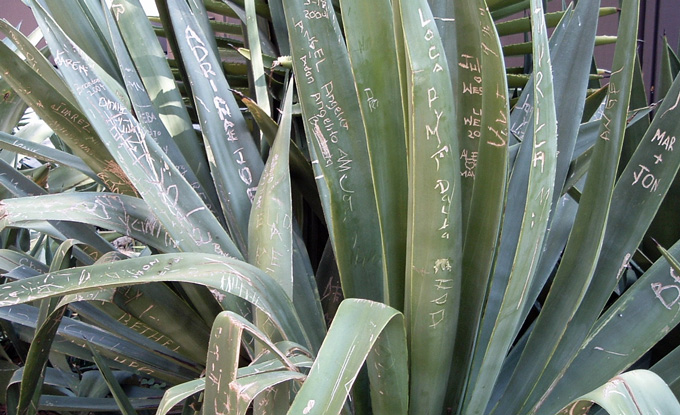
“When the earth is shaken with a (violent) shaking, And the earth reveals what burdens her, And man says: What has befallen her? On that day she shall tell her story....” (Qur'an 99:1-4)
In light of today’s environmental crises, many secular and religious scholars have begun to look into underlying philosophical causes for man's rapacious attitude towards his environment. Part of this search involves a look at root philosophies affecting the human outlook and interaction with the world and the responsibility religion shares in creating the attitudes and philosophies that have led to the desecration of nature that has occurred in the past few centuries and which seems to be accelerating in our times. As Ziauddin Sardar writes;
“The roots of our ecological crises are axiomatic: they lie in our belief and value structures which shape our relationship with nature, with each other and the lifestyles we lead.” (Sardar, Ziauddin. Islamic Futures. New York; Mensell Publishing Limited. 1985. pg.218)
For this reason traditional religions like Christianity, Judaism and Islam are held accountable as they supposedly espouse an anthropocentric (human-centered) reality. Writers like Lynn White Jr. see this as being the root cause for the ecological/environmental problems of today. He decries not only the dualistic nature of man’s relationship with nature but also the idea “that it is God’s will that man exploit nature for his proper end...” as “Man shares, in great measure, God’s transcendence over nature.” (White, Lynn. The Historical Roots of our Ecological Crises. Science, 155. 1967) [1]
This short essay is a sincere effort to investigate the validity of White’s view that the disrespect for nature is inherent in the very nature of these religions. Dealing only with the Islamic tradition, it will take into consideration the nature of man, his place in relation to God, his rights and responsibilities before God, and his relationship to the rest of the world with regard to his rights over it. In other words the world-view of Islam is to be the starting point for the examination of man’s relation to the world of external nature.
“All religions, customs, schools of thought, and social philosophies rest on a world view. A school’s aims, methods, musts and must nots all result necessarily from its world view... A world view can become the basis of an ideology when it has attained the firmness and breadth of philosophical thought as well as the...sanctity of religious principles.” (Mutahhari, M. Fundamentals of Islamic Thought. Berkeley; Mizan Press. 1985)
The primary basis of an Islamic world view is the idea of Tauhid, or the oneness of God. A world view based on tauhid sees this universe as originating from God, returning to Him, and centered around Him. It is a world created and sustained by God with a purpose, and a design. As this entire universe is a product of His divine wish, it is a universe unfolding with a divine purpose. The reference point, the center of all things is God.
“...Tauhid is the matrix for human thought and action, it is all pervasive and penetrates every aspect of our endeavour.” (Sardar, Ziauddin. Islamic Futures. New York; Mensell Publishing Limited. 1985. pg.225)
The essential prerequisite, in Islam, is the belief in this absolute oneness and unity of God.
“God the Ultimate reality is One, and everything other than God comes from God and is related to Him. No true understanding of anything is possible unless the object in view is defined in relationship to the divine. All things are centered on God.” (Chittick, William. Article, ‘The Concept of Human Perfection.’ from, The World & I. New York; News World Communications. Feb. 1991. pg. 500)
Tauhid is the point of origin of a theological doctrine of ecology. All things seen or unseen are God’s signs (ayat) and act as witnesses to His existence. All things in the universe are manifestations of Him, all are from Him.
Human nature is the other key facet of the world-view of Islam. Man fulfills a very important role in this cosmos. Although all things are made by God and identified with God in as much as their being created by Him, man enjoys a role as God's vicegerent (his representative) having a freedom and far-reaching power latent within him. In the Qur'an God says He has breathed His spirit into man.
“When thy Lord said unto the angels: lo! I am about to create a mortal out of mire, And when I have fashioned him and breathed into him of My Spirit, then fall down before him prostrate.” (Qur'an 38:72-73)
This verse provides essential insights into man's position and nature in this universe. Although he is a creation of God he is superior to the rest of God’s creation as he has within him the Spirit of God. In this way he is unique among the creations of God. It is only man to whom the angels are commanded to prostrate themselves.
Another aspect that separates him from the rest of creation is his acceptance of the trust offered by God. This trust was offered to all of creation and man was the only one who accepted it.
“We did indeed offer the trust to the heavens and the earth and the mountains; but they refused to undertake it, being afraid thereof. But man undertook it (the trust)” (Qur'an 33:72)
In a matter of trust and trusteeship, the giver of the trust is giving a responsibility to the trustee. In other words the guardian of the trust has a high degree of freedom and accompanying responsibility in the use (or misuse) of the given trust.
The trustee is expected to fulfill the trust in the manner that the giver of the trust would expect of him. If man did not have the power to either use or misuse this trust given to him by God, then the whole idea of offering the trust, in the first place, would be futile. Abdullah Yusuf Ali, a commentator of the Qur’an says of this verse:
“There is no trust if the trustee has no power, and the trust implies that the giver of the trust believes and expects that the trustee would use it according to the wish of the creator of the trust, and not otherwise.” (Ali, A.Y. The Holy Qur’an; Text, Translation and Commentary. Maryland; Amana Corporation. 1989. pg. 1080) [2]
So man has the freedom to do what he wills with the power invested in him through these two means. One is his closeness to God in spirit and second is his acceptance of the trust. Man’s superiority, control and power over nature and the rest of creation was thus a part of this trust. After having taken the responsibility man had to show that he was indeed worthy of keeping it. If he forgets about the responsibility of the trust and instead takes full and destructive advantage of the power conferred upon him, the other side of his superiority takes over. Because he has the spirit of God within him, he now deems to set himself up in rivalry to God. He wishes to take control of the destiny of the world not as a trustee but as a demi god.
“...He was indeed unjust and foolish.” (Qur'an 33:75-76)
When the power of his relationship to God is applied without the temperance of the responsibility of the trust, man misuses and abuses the abilities, potentials, and rights given to him by God. Nature has been given to man as a trust and nothing more. ‘His right of domination over it (is) only by virtue of his theomorphic make up, not as a rebel against nature.’ (Nasr. S.H. The Encounter of Man and Nature. London; George Allen and Unwin Ltd. 1968. pg.96) God has given revelation, and the law (shariah) derived from the revelation to assist and guide man in fulfilling this trust. Ziauddin Sardar writes:
“The ultimate consequence of man’s acceptance of trusteeship is the arbitration of his conduct by divine judgment. To be a Muslim is to accept and practice the injunctions of the Shariah. Thus the Shariah is both a consequence of one’s acceptance of Tauhid and it is a path.” (Sardar, Ziauddin. Islamic Futures. New York; Mensell Publishing Limited. 1985. pg.228)
The questions that arises anew for each generation, is how to give practical shape to the ethical norms in Islam. No moral or ethical issue is only an abstract idea in Islam. They are sometimes codified in Shariah, but are otherwise meant to be examined, practiced, and incorporated into the laws that regulate a society. Together, they can provide provide a framework, an environment within which men as individuals and as a society can fulfill the role of trustee. The ethical imperatives and boundaries set the limits and parameters and the practical guidelines that can lead to a principled approach, which when ignored causes the kind of disruption in human life seen in the form of severe ecological crises. This is because that part of ethics that pertains to nature has been completely ignored. Instead of working in subservience to God as his vicegerent, man has developed an axiology that invites him to dominate nature rather than act as a protector over this aspect of God’s trust. Rather than fulfill a trust, man elevates himself to the status of dominator - deciding the fate of nature without reference to revelation. He has set himself on par with God and about this type of an action the Qur’an says:
“Indeed you have put forth a thing most monstrous! As if the skies are ready to burst, the earth to split asunder and the mountains to fall down in utter ruin.” (Qur'an 19:88-89) (This verse actually deals with the attribution of Godhood to Jesus, son of Mary. In this context, however, it is being used to demonstrate the abhorrence of any equal being set up with God.)
In the Islamic world-view the relationship of man with nature should be like that of a just ruler with his subjects. Although the ruler has power over his subjects, his subjects are a trust over which he stands guards. He is expected to act in a responsible way (as defined by the revelation) toward them. Misuse and abuse of his power would shift him from being a leader to being a tyrant. The end result of tyranny is nothing but a revolt against the tyrant. This is precisely what is happening between man the tyrant and nature the tyrannized. Tyranny is effective only in the short term.
Among the works of Zain-al-Abideen (the fourth Imam of the Shi’ites), is his “Treatise on Rights”
em>. Among the many types of rights described he puts forward the rights of the subjects over their ruler. In this context they can be extended to form a value system for the formation of an ethic toward the environment or any other aspect of the world over which man has power or dominion.All acts towards the ruled should be imbued with mercy and justice; the ruler’s disposition should be like a father toward his child.
“The right of your subjects through authority is that you should know that they have been made subjects through their weakness and your strength. Hence it is incumbent on you to act with justice toward them and to be like a compassionate father toward them....” (Zain al Abideen. The Psalms of Islam. London; Mohammadi Trust. 1988. pg.286.)
Man, being above material nature due to his theomorphic make-up and the burden of the trust, must deal in a similar way with the environment. The “Treatise on Rights” also describes the rights a subject enjoys over his ruler through the aspect of the ruler’s knowledge. Taking knowledge to be synonymous with intelligence, man is endowed with a higher intelligence than the rest of creation. Because of this he must assume a role of guardianship over the rest of creation and interact with nature in a way that is worthy of this intelligence. If man does what is befitting of his high station, then God will increase His bounties toward man. If he does not, then whatever he was blessed with is withheld or taken back. Imam Zain-al-Abideen states it as follows:
“The right of your subjects through knowledge is that you should know that God has made you a caretaker over them only through the knowledge He has given you and His storehouses which He has opened up to you. If you do well..., not treating them roughly or annoying them, then God will increase His bounty toward you. But if you ... treat them roughly..., then it will be God’s right to deprive you of knowledge and its splendor and make you fall from your place....” (Zain al Abideen. The Psalms of Islam. London; Mohammadi Trust. 1988. pg.286.)
Zain-al-Abideen then goes on to talk of the rights of those over whom you are in a position of mastership, such as a servant.
“...you should know that he is the creature of your Lord....You did not create any of his limbs, nor do you provide him with his sustenance; on the contrary, God gave you the sufficiency for that...and deposited him with you so that you may be safeguarded by the good you give to him. So act well toward him, just as God has acted well toward you.” (Zain al Abideen. The Psalms of Islam. London; Mohammadi Trust. 1988. pg.286.)
Nature has been made subservient to man, but it is as much a creature of God as man is. Neither has man created nature nor is he in any way able to sustain it. It is only because God has given him the sufficiency and capacity can he in any way do so. If he is able to plant a tree and administer its growth or manipulate its genetic characteristics, it is only because of the intelligence placed within him by God. Just as God has been good to man so also man must act with the same beneficence toward nature so that he may safeguard himself when facing God.
Another key aspect of the Islamic world view is its immense stress on eschatology. Belief in a day of judgment is essential to the faith of an adherent. It creates an action guide arising from an awareness that actions have consequences far beyond their immediately apparent effects. Since man will be called to account for how he looked after the trust bestowed upon him, he is forced to not only consider present gains but to plan for the future in order to fulfill the responsibility with which he has been invested. His acts have repercussions that ripple out horizontally from himself affecting what surrounds him in this world as well as vertically since his substance has a presence in the higher worlds. So the consequences of his actions accumulate within his substance and after his death he faces the reality of what he has done and what he has become.
“Then on that Day, Not a soul will be wronged in the least, And ye shall but be repaid the meeds of your past deeds.” (Qur'an 36:54)
Eschatology is the policing force within Islam which guides the believer to fulfill the trust that he had taken on. The thought of an impending judgment stops him from taking actions according to his own whims and fancies. It puts a brake on self-centered aspirations.
Man’s role of vicegerency, his mantle of superiority and his responsibility of trust are laid bare before him in the Qur’an, it is then his decision to choose which path to take. On the one hand he has before him all the treasures of nature to use and exploit as he wishes through the fulcrum of his knowledge. On the other hand is the temperance of the responsibility which coexists with the trust and intelligence given to him by God. The world-view of man and the conceptual foundations which underlie that world-view decide which course man will take.
“Can we...check this threat to our planet simply by introducing stricter legislation against pollution, industrial waste and nuclear spill? Can we reverse the degradation of our environment by adopting conservationist policies on both national and international levels? Or could it be that the whole ecological imbalance betokens the spiritual and teleological crisis of modern civilization itself? Does it require fundamental revision of our own way of life, our cherished goals, indeed our very conception of ourselves and the world?” (Parvez Manzoor, Touch of Midas)
It has been the contention of this brief essay that the roots of the man made environmental crises, and therefore their resolution, lie in man’s conception of his role in the overall scheme of creation. The crises that are being faced today are approaching a point of critical mass such that man is forced to confront certain basic questions about his relationship to the environment. These are not questions of technology, but questions about the fundamental nature of man, the nature of the universe he exists in, and of the ultimate nature of Reality.
*
To be notified when new articles are added to this site, please follow @i_from_i (islam from inside). Or, if you prefer, subscribe to the islam from inside RSS feed.
Footnotes
-
1 – Lynn White– Lynn White refers specifically to the problem inherent in the Christian tradition, but in a general sense extends it to all the monotheistic religions, as opposed to the pantheistic ones. About blaming Christianity, Parvez Manzoor, in The Touch Of Midas, writes: “...Christianity does not bear the blame for our environmental problems. It is the divorce of Christian ethics from the pursuit of knowledge, in fact what is known to be the age of ‘rationalism’ that ushered us into the era of environmental degradation.”
-
2 – This is not an attitude that is unique to Islam as can be seen in the following quote from the Bible “When a man has had a great deal given him, a great deal will be demanded of him; when a man has had a great deal given him on trust, even more will be expected of him.” (Luke: 12:48). It is, however, an attitude that is all pervasive in the Islamic world-view.