
Bismillah al-Rahman al-Rahim
Jesus: An Islamic Perspective
A “Spirit of God”
Added December 25, 2003
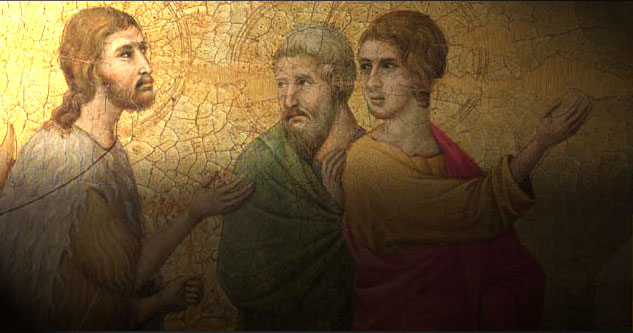
Many Muslim writers when writing about Jesus (a.s.) inevitably deal with him in negative terminology (as in ‘he is not the son of God’). Muslims and Christians have spent a good deal of time debating these aspects of Jesus always using Christian theology as a starting point. Due to this the Christian community does not know how Christ is perceived in purely Islamic terms.[1]
Without an understanding of the “positive” side of the Islamic perspective on Jesus (a.s.), the Islamic rejection of certain ideas concerning him can never be understood. Without knowing who and what he is, we can never know who or what he isn't.
A principal factor underlying this misapprehension is the fact that these two faiths take different approaches to some of the most fundamental questions of religion.[2]
For example, the question of the essential nature of man, the nature of God, and how the salvation of mankind and his reconcilement with God is to be achieved.
The Islamic position on Jesus can never be understood through attempts to disprove the Christian claims concerning Jesus - this method will only give one a picture of what Jesus is not. Only by placing him within the theological, ontological, and spiritual context of Islam is it possible to gain some insight into the place of Jesus in Islam.[3]
The point of departure, and the point of orientation, the point against which all things are measured in Islam, is God (who is One and Indivisible). The Qur'an says:
“Say, He is God, the One and Only, The Eternal, Absolute; He begets not, Nor is He begotten; And there is none like unto Him.” (Qur'an. Ch 112)
The foundation of Islamic belief then, is the belief in the absolute oneness, unity, and uniqueness of God. One of the terms used in the above quoted sura is “samad”. Samad is something that is so seamless and whole that one cannot even conceptualize it as divided or in parts. It has such an integral unity that it is absolutely without seam or fissure - completely unified.
“God the Ultimate reality is One, and everything other than God comes from God and is related to Him. No true understanding of anything is possible unless the object in view is defined in relationship to the Divine. All things are centred on God.” (Chittick, William. Article, ‘The Concept of Human Perfection.’)
All other things, seen or unseen, are his signs (ayat) and act as witnesses to His existence. All things in the universe are manifestations of His, all are from Him. God is “the Reality that is dependant upon no other reality, but upon Whom all realities depend, through Whose Will all realities have come into being, and Who has not Himself come into being through any other principle.” (Mutahhari) God is One and it is not logically conceivable that there is more than one God. Since God is an absolute, unlimited being it is inconceivable that there is more than one such being. If there were more than one then the adjectives absolute and unlimited could no longer apply. (Mutahhari)
Man enjoys a very important role in this cosmos. Although all things are made by God and identified with God in as much as their being created by Him, man is one who houses an aspect of God within him. In the Qur'an God says He has breathed His spirit into man.
“When thy Lord said unto the angels: lo! I am about to create a mortal out of mire, And when I have fashioned him and breathed into him of My Spirit, then fall down before him prostrate.” (Qur'an. Ch 38- verses 71,72)
This verse provides essential insights into man's position and nature in this universe. Firstly it says that man is made of a dual nature. He is part earth and part divine spirit. Of the portion that is earth, the Qur'an calls it a stinking clay. There are two opposing forces within man, one which is totally animal, material, carnal (clay) and the other is the purest essence - the spirit of God.
“Hence human beings represent a mixture of clay and spirit, darkness and light, ignorance and knowledge, activity and passivity ... all divine attributes are present in man, but they are obscured by those dimensions of existence that manifest a lack of the same divine attributes.” (Chittick, William. Article, 'The Concept of Human Perfection.' from)
A lack of divinity would mean a lack of understanding and knowing what is divine. It is the innermost spirit that is the only part of a human that can in some sense perceive that divine Reality, as it is essentially a part of it. The rest of man is a curtain between him and God. It is a partition, a covering, a veil of separation cast between man and God. It is with these tensions within his nature that the first man (Adam) was created.
The “clay” aspect causes him to “incline towards the earth” (Qur'an). The spirit aspect draws him towards God. For this reason the Qur'an says that Adam was created with the two hands of God's power. One hand represents the attributes (or names) of God that draw man near to God (e.g., mercy, love, compassion etc.). The other hand represents the attributes of distance and wrath (e.g., Majesty, Wrath, etc.), those qualities which separate man from God.
“The most invisible dimension of the human being reflects the divine light directly, while the bodily or visible dimension reflects it only dimly or not at all.” (Chittick, William. Article, 'The Concept of Human Perfection.')
Man has to pull aside this veil of the corporeal or material self. Shunning it he is able to let his invisible dimension reflect the light that it so wants to see. This spirit of God which resides in man longs for a reunion with its original, it reaches out and makes man's soul restless to cleanse itself of all that is not God. As man lays away his corporeal vestments his inner being sees more clearly. It gains a vision which sees what was previously unseen. Gates of knowledge are opened up to it and before such a person will be laid out the secrets of the realities underlying the Universe. The distance between man and God has been bridged by such people.
“My servant continues drawing near to Me ... until I love him, and when I love him, I am the Hearing through which he hears, the Sight through which he sees, the Hand through which he grasps, and the Foot through which he walks.” (Hadith Qudsi)
Such men have been chosen to represent God in every way, they see through Him, hear through Him, walk, grasp, think, love... their every faculty has been captured and they have shackled themselves to the ‘robe of His Majesty’.
“My God I have fixed the fingers of my love to the ends of thy cords ... My God these are the reins of my soul-I have bound them with the ties of Thy will.” (Ali ibn Abi Talib. Supplications. London; Mohammadi Trust. pgs. 10, 12)
One who has achieved this proximity to God is known in Islamic terminology as ‘Insaan al-Kamil’ or the perfect (or perfected) man. It is in this context that Jesus must be viewed. He is called in the Qur'an, a sign (ayat) of God. The Prophets of God are generally all given this designation. They are all (from Adam to Muhammad) signposts marking the path to God, each one addressing both the universal nature of man and the specific contingencies of his time.
Jesus is a signpost who links man back to his original ancestor (Adam). The Qur'an says:
“The similitude of Jesus before Allah is as that of Adam; He created him from dust, then said to him: ‘Be’ and he was.” (Qur'an. Ch. 3 v.59)
So in the very act of his creation, a link is forged with the origins of mankind. The Qur'an also says of Jesus that:
“The Messiah, Jesus, son of Mary, is the apostle of God, and His Word, which He projected unto Mary, and a Spirit proceeding from Him” (Qur'an. Ch. 4 v.170)
The “Word” is God's creative Word (with which He also created Adam), the “Spirit” is the Divine Spirit (which he also breathed into Adam). Thus Jesus is created according to the mould of Adam - but he is as Adam was before the fall from Paradise, before Adam was put into this world, where God's presence is veiled and must be sought through signs. Thus Jesus, from the moment of his miraculous conception to the time he is taken up to God, is one who was “Insaan al-Kamil”.
He has seen with the perfection of his inner eye the secrets of this Universe. When he tells man of Paradise he has seen it, when he talks of God he knows Him. His every word is spoken from knowledge. He sees and hears and moves through God. The Spirit of Allah is his guide. Furthermore, he is an apostle of God, that is, one charged by God to provide guidance for mankind and to bring man towards the path of perfection and salvation - and to be a sign which hints at the heights to which man is capable of rising.
It is a fundamental principle in Islam that one who is not guided cannot guide. Thus Jesus is a fully realized man and an apostle of God. Jesus thus becomes, in Islam, a symbol (or sign) of the immense potential that exists within man's fundamental nature. The Prophet's of God are sent to guide man and to show man how to actualize this potential within him.
But even one who actualizes this potential and attains a type of union with God, does not become God. God remains God. The Qur'an rejects with absolute vehemence the insinuation that Jesus is God or the son of God. It says of those who make such assertions that:
“Indeed ye have put forth a thing most monstrous! As if the skies are ready to burst, the earth to split asunder, and the mountains to fall down in utter ruin.” (Qur'an. Ch. 19 v. 88)
The reason for such a strong rejection is that those who put forth such claims have fundamentally misunderstood the basic nature of God, His creation, and the miraculous nature with which He created man. God's aim is to uplift man, to redeem him through the unique nature with which he created man. In the above quote from the Qur'an, the heavens (skies), the earth, and the mountains are reacting to the attribution of divinity to Jesus. This is because before the creation of Adam, the Divine Trust was offered to these creations of God and they refused to undertake the responsibility. Man, however, undertook the responsibility.
“We did indeed offer the Trust to the Heavens and the Earth and the Mountains; but they refused to undertake it, being afraid thereof: But man undertook it....” (Qur'an. Ch. 33 v. 72, 73)
Conferring divinity upon any of God's servants or creatures, even one as exalted as Jesus, is characterized as a betrayal of this Trust which God bestowed upon man.
Jesus and the unique method of his creation, his “perfected” status, and his apostleship to God, combine to create, within the Islamic context, a picture of a man who was both a servant and a friend (awliya) of God. He is also seen as a man who was a sign, a symbol granted to mankind by God, and a guide who awakens man to his nature, potential and relation to God.
“A ‘spirit of God’: of no other.... His relation towards his Lord is such, That he acts through it in superior and inferior worlds. God purified his body and elevated him in spirit, And made of him the symbol of His act of creation.” (Muhyi-d-Din Ibn Arabi. The Wisdom of The Prophets. Gloucestershire; Beshara Publications. pg. 68)
*
To be notified when new articles are added to this site, please follow @i_from_i (islam from inside). Or, if you prefer, subscribe to the islam from inside RSS feed.
Footnotes
-
1 – The Arabic name for Jesus (a.s.) is Isa. He represents the pure Adamic man - Adam before the fall. “The similitude of Jesus before Allah is that of Adam...” (Qur'an 3:59). The letters “(a.s.)” are an abbreviation for a term of respect “alai-is-salaam” which means (Peace be upon him/her). This term is used when the name of a prophet or a respected personality is mentioned. The term “Christ” is from the greek “Christos” (anointed). The Arabic and Qur'anic form of this word is “Masih” (Messiah) and this is the title used for Jesus in the Qur'an.↵
-
2 – “Faiths” is used here to denote a complete religious system, a comprehensive world view that provides for and takes into account all the dimensions of humanity (spiritual, social, personal etc.) and that provides a framework of guidance within which human beings can attain their potential.↵
-
3 – Ontological refers to the metaphysics of the nature of being (of existence). The nature of God, His Being and the consequences of this nature for humans. The nature of the being of all existing things. And “spiritual” is taken to mean the inner life and the inner capacities inherent in the nature of man and how these interact with "unseen" realities that are spoken of in the various scriptures. These inner capacities are qualities which lie potentially within everyone but which must be drawn out through living in accord with spiritual realities. ↵
-
4 – Related Articles